
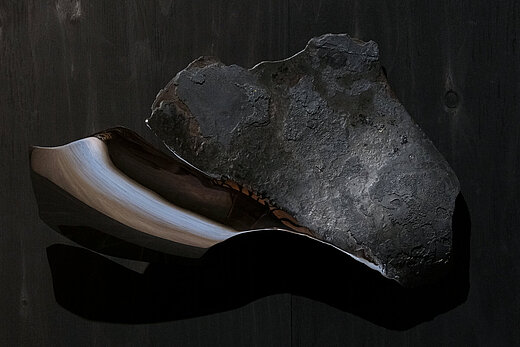
Surfaces preserve the marks left by use. In them, the traces of time, the environment and human hands condense into a silent chronicle of use.
With the curated exhibition What the Surface Remembers, Wilkhahn opened up a new perspective on materiality in the tension between permanence and change during Milan Design Week.


Starting from the WiChair, a multilayered exploration of surfaces as the memory of the object emerged. The swivel chair placed steel at the center as a living medium—a material that responded to forces and translated them into a tangible presence. The spring steel frame rendered the rigid dynamic; its tension enabled balance. This idea was also reflected in the sculptures of the Japanese artist Aya Sasakura: organic forms that seemed to store movement, inscribed into the metal like the traces of its making.
The exhibition was complemented by photographs by the German photographer Frank Schinski, documenting traces of a life lived. Beyond artistic intention, they manifested the aesthetics of the moment.
Between the clarity of industrial precision and the poetry of natural patina, a compelling image unfolded of how surfaces became carriers of history.


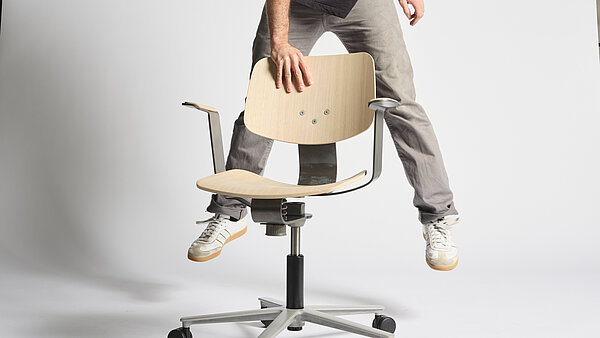
WiChair
The WiChair is a compact, minimalist swivel chair. With its clean lines, it blends discreetly into a variety of environments and adds subtle accents through its color palette.
Behind its minimalist design lies a surprising level of comfort: The flexible steel swing arm allows for natural movements in all directions. The chair effortlessly adapts to different body sizes and weights.
The choice of materials and construction also follow specific principles: The seat and backrest are made of FSC Mix-certified molded wood. The individual components can be disassembled and replaced as needed without having to replace the entire chair.
Artists
Aya Sasakura

»Within the varied textures of stainless steel, the landscapes of my earliest memories – the sea and the mountains – begin to overlap. Finding a clear presence that resonates within them and giving it form is, for me, a deeply satisfying and joyful act.«
Born in 1974 in a fishing village on the west coast of Shikoku, she studied crafts and industrial design at the Junior College of Musashino Art University. After several years in commercial art, she moved to Kasama in 2008 and developed her own artistic practice there.

Frank Schinski

»I often come across the notion that this or that is important and therefore must be photographed. What I appreciate about documentary photography is the opportunity to focus on seemingly unimportant things and give them meaning. They become important because they are photographed.«
Born in Prenzlau in 1975, he began an apprenticeship as a bricklayer in 1992, later obtained his A-levels and studied documentary photography. He has been a member of the Berlin-based photography collective OSTKREUZ since 2009. He lives and works in Hanover.


