
Sustainability at Wilkhahn: Insights from the Sustainability Report 2026–2028
Sustainability Min.

Change is part of everyday life. Shifting social expectations, new ways of working together and the challenges of climate change are raising fundamental questions about how we design our workplaces. How can we create spaces that meet people's needs today while conserving resources for tomorrow? Which products do we really need? And what does it mean for a company to take responsibility for the long term?
For Wilkhahn, the answer lies not in isolated measures, but in a holistic approach that brings together environmental, social and economic responsibility. This extends from designing timeless products and adopting resource-efficient manufacturing processes to ensuring fair working conditions throughout the supply chain. At the heart of this approach is a fundamental question: Does a product serve a meaningful purpose? The aim is to create furniture that delivers lasting value, remains in use for as long as possible thanks to its repair-friendly design, and can be returned to the materials cycle at the end of its useful life.
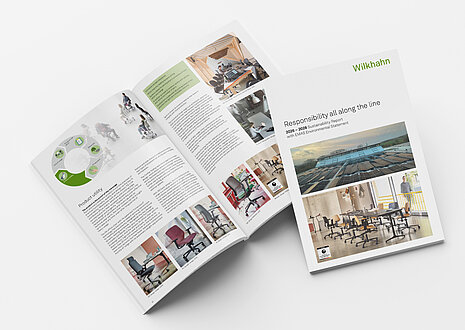
The 2026–2028 Sustainability Report, including the EMAS Environmental Statement, provides a transparent account of how Wilkhahn puts these principles into practice. It highlights the progress already made, the challenges that remain and the goals the company has set for the years ahead. Through concrete environmental performance data, independent verification and a clearly defined action programme, the report demonstrates how ethical principles translate into measurable accountability.
“Bad and unnecessary products remain bad and unnecessary, even if they are produced in an environmentally responsible way.” This statement from Wilkhahn’s Sustainability Report captures a philosophy that has shaped the company for decades: sustainable product development does not begin with the choice of materials or manufacturing processes, but with a more fundamental question – is a product really needed, and what lasting value can it offer?
Rooted in the traditions of the Bauhaus and the Ulm School of Design, Wilkhahn embraces the principle of “less is more”: focusing on what matters, eliminating the unnecessary and creating solutions that stand out for their functionality, quality and timeless appeal.
This philosophy is reflected in another guiding principle: “The longer and better, the more desirable.” After all, furniture that performs reliably for many years and can adapt to changing needs has the potential to reduce the demand for new products. To support this goal, Wilkhahn uses modular designs that allow individual components, such as covers, upholstery or armrests, to be replaced. This is complemented by a five-year manufacturer's warranty and repair options for up to two years after a product has been discontinued.
Wilkhahn also assesses the environmental impact of its products throughout their entire life cycle. Product concepts and alternative materials are evaluated using life cycle assessments based on EN ISO 14044. Since 2022, the company has also been assessing the carbon footprint of newly developed products. Because good furniture should not only meet today's needs, but also retain its value for generations to come.
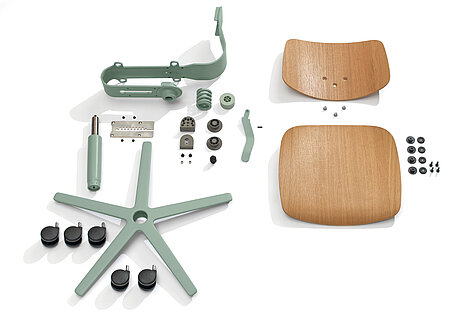
Photo: Thomas Bach, Hannover
Furniture that stays in use for longer needs to be replaced less often. And when a product can be dismantled into its constituent materials at the end of its useful life, new opportunities for recycling emerge. For Wilkhahn, these two principles go hand in hand.
Circular design has a long history at Wilkhahn. As early as 1993, the Picto chair was designed to allow its materials to be separated by type. Today, the use of largely homogeneous materials, consistent material labelling and detachable connections means that at least 90% of the materials used in Wilkhahn office furniture can generally be recycled.
Preserving the value of products remains the priority: repair, refurbishment and reuse take precedence over recycling. Only when a piece of furniture can no longer be put to good use are its components returned to the recycling system. To support this process, Wilkhahn takes back used furniture at its headquarters in Bad Münder or helps arrange appropriate recycling locally.
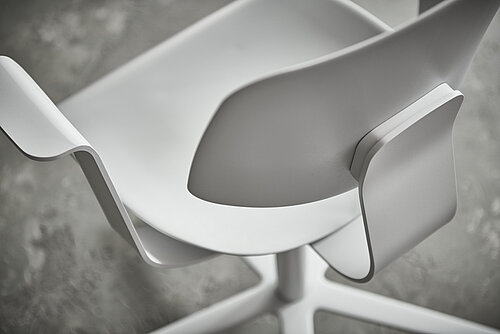
Recycled plastics and reclaimed materials are used in a wide range of Wilkhahn product components, from seat shells to textile upholstery. The seat shell of the Yonda, for example, is made from a biocomposite containing 70% recycled polypropylene and 30% locally sourced waste wood. The WiChair, introduced in 2025, uses post-consumer polypropylene recovered from plastic packaging for its seat and backrest shells. Its pared-back construction also earned it the German Sustainability Award in the “Products” category in 2025.
Recycled materials also feature in Wilkhahn's upholstery collection. The ReForm knitted fabric used in the IN office chair, for example, is made from 100% recycled PET and reduces the chair's carbon footprint by approximately five kilograms of CO₂.
These examples demonstrate that recycled materials and sophisticated design need not be at odds. On the contrary, they can open up new possibilities for furniture design, provided that functionality, quality and longevity remain equally important.
Sustainability requires strong convictions – and verifiable results that make their impact measurable.
For more than two decades, Wilkhahn has documented its environmental performance through the European Eco-Management and Audit Scheme (EMAS). The company's headquarters in Bad Münder has been EMAS-validated since 2001 and is registered under number D-133-00055. The site is also certified to ISO 14001 for environmental management and ISO 9001 for quality management.
Unlike a voluntary commitment alone, EMAS requires regular assessments of environmental performance and a publicly available environmental statement, independently validated by accredited environmental verifiers.
The EMAS Environmental Statement included in the 2026–2028 Sustainability Report documents the development of key environmental indicators since 2022. These include energy and material consumption, emissions, waste generation and water use. The site-specific environmental data and management system certifications presented in the report relate to Wilkhahn's headquarters in Bad Münder.
Wilkhahn also uses external certification schemes to substantiate claims relating to materials and products. The FSC® certification of its Bad Münder site (FSC® C118389) confirms its authorisation to process and distribute appropriately certified wood products. Wilkhahn uses various materials that carry the Blue Angel environmental label, which sets stringent requirements for factors including harmful substances and emissions. Furthermore, the product range is continuously certified to the GREENGUARD standard.
In this way, Wilkhahn's sustainability commitments are supported by recognised, independently verified environmental labels and publicly accessible information, making its measures more transparent and easier to assess.
Taking responsibility means being open not only about achievements, but also about where expectations and reality do not align. Wilkhahn's Sustainability Report reflects this approach, highlighting both the improvements achieved and the challenges faced in recent years.
At its headquarters in Bad Münder, 100% of the electricity purchased comes from hydropower. By switching to LED lighting and introducing more efficient compressors, Wilkhahn reduced its electricity consumption by 21% compared with 2022.
Progress has also been made with the company's vehicle fleet. By reducing the number of vehicles and partially transitioning to electric mobility, CO₂ emissions fell to 243 tonnes in 2025 – around 48% below the 2022 level. Working with suppliers to introduce reusable packaging has also helped to cut packaging waste by approximately half.
The site's heating supply illustrates that the transition towards more sustainable operations is not always straightforward. Since 2012, district heating generated from biogas has been the main source of heat at Wilkhahn's headquarters. However, due to unplanned repairs to the heating pipes, it covered only 60% of heating demand in 2025, falling short of the target of at least 70%.
As a result, the share of renewable energy also dropped below the 80% target. At the same time, CO₂ emissions from production and administration rose from 263 tonnes in 2024 to 525 tonnes in 2025.
Disclosing developments like these is an essential part of credible sustainability reporting. Progress does not mean meeting every target immediately. What matters is identifying where targets have been missed, explaining the reasons and using those findings to define concrete actions for improvement.
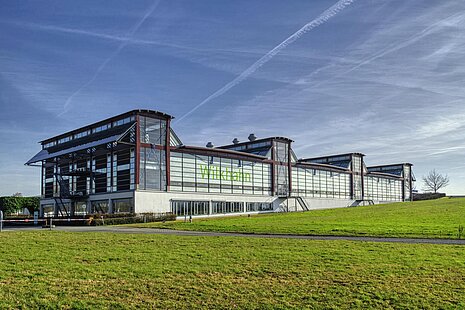
Building on these findings, Wilkhahn has defined its next steps in the 2026–2028 Sustainability Action Programme. The main focus is on further reducing energy consumption and associated emissions at its headquarters in Bad Münder.
By 2028, Wilkhahn aims to reduce Scope 1 and 2 CO₂ emissions by 20% compared with the 2025 baseline. Scope 1 covers direct emissions, such as those from company-owned vehicles or fuel combustion, while Scope 2 includes indirect emissions from purchased energy.
The company also aims to reduce fossil fuel consumption by 15%, purchased electricity consumption by 10% and vehicle fleet emissions by a further 5%, all compared with 2025 levels.
Alongside climate action, Wilkhahn is placing greater emphasis on product transparency. By 2027, at least 80% of its active product portfolio is intended to be certified under the European femb level sustainability standard. The company also plans to expand its environmental product information to include specific CO₂ figures.
For architects, specifiers and businesses selecting sustainable office furniture, these measures are intended to provide a more informed basis for decision-making. The aim is to move beyond general descriptions of environmental attributes towards greater transparency and comparability at the individual product level.
Sustainability is not just about energy consumption, material cycles or carbon footprints. It is equally about the people who design and manufacture products, as well as those involved throughout the supply chain.
At Wilkhahn, social responsibility has long been an integral part of the company's values. Fairness, employee participation and reliable working conditions are just as important to this commitment as the responsible use of resources.
Wilkhahn joined the UN Global Compact in 2007, committing to its ten principles covering human rights, labour standards, environmental protection and anti-corruption. Suppliers are required to comply with the core labour standards of the International Labour Organization (ILO) and the principles of the UN Global Compact.
Another important foundation is the international framework agreement signed in 2009 with IG Metall and the Building and Wood Workers' International (BWI). The agreement aims to strengthen workers' rights and fair working conditions throughout international supply chains.
Wilkhahn also prioritises regional sourcing wherever possible. In 2025, approximately 66% of the materials purchased by value came from Germany. By 2028, the company also aims to conduct regular on-site audits of its 20 most important suppliers.
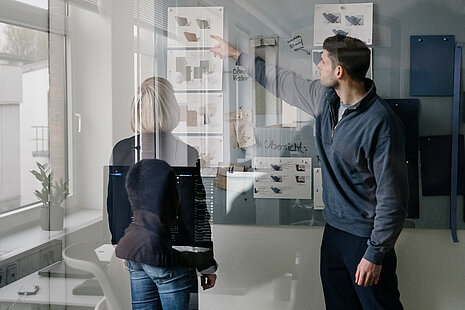
Photo: Ludwig Schoepfer/StudioTusch
What does it mean to run a business sustainably in a constantly changing world? Wilkhahn's 2026–2028 Sustainability Report shows that responsibility requires continuous reflection and must be translated into concrete decisions. From questioning which products are truly needed to their design, manufacture, repair, reuse and recycling. From energy supply at the production site to fair working conditions throughout the supply chain.
The report highlights what has already been achieved, while also identifying areas where further progress is needed. This is precisely where its value lies: in combining long-held principles with measurable targets and a willingness to critically assess the company's own actions.
After all, sustainability is not a destination to be reached once and for all. It is a commitment that must be demonstrated through everyday actions – and through the decisions we make today for tomorrow.
Wilkhahn sees sustainability as combining economic success with responsibility towards people and the environment. This approach is rooted in a 1989 resolution by the company's Board of Directors, which established that environmental and social responsibility should take precedence over short-term profits when priorities conflict. In practice, this means durable, repairable products, integrating environmental and social criteria into core business operations, and an EMAS-validated environmental management system at its headquarters in Bad Münder.
The circular economy is an integral part of Wilkhahn’s product development objectives. New products are designed to be at least 90% recyclable, with modular construction, detachable connections and material labelling allowing components to be separated by material type. Examples include the Yonda seat shell, made from recycled polypropylene and waste wood, and the WiChair seat and backrest shells, made from recycled materials. Wilkhahn also takes back and dismantles products at its headquarters in Bad Münder.
Wilkhahn evaluates product concepts and materials using life cycle assessments based on EN ISO 14044 and has analysed the carbon footprint of new products since 2022. The aim is to ensure a long service life: components subject to wear and tear can be replaced, and products come with a five-year manufacturer’s warranty. Standard upholstery foams contain no halogenated flame retardants, while upholstery fabrics are free from azo dyes. Environmental product information is available for many products.
At its headquarters in Bad Münder, Wilkhahn has used carbon-neutral district heating from biogas since 2012, purchases 100% renewable electricity from hydropower and operates a photovoltaic system. LED lighting and new compressors have helped reduce electricity consumption. The company has also reduced the size of its vehicle fleet and partially electrified it, cutting fleet CO₂ emissions by 48% between 2022 and 2025. Planned measures include assessing the potential for battery storage and decommissioning a heating oil tank.
Wilkhahn publishes a Sustainability Report incorporating an EMAS Environmental Statement, with the current edition covering 2026–2028. The report complies with EMAS requirements and draws on the GRI Standards. Its EMAS-relevant content is validated by an independent environmental verifier. It includes data on materials, energy, emissions, waste and water dating back to 2022, highlighting both achievements and targets that have not been met. An update is scheduled for spring 2027.
No. According to the report, the EMAS, ISO 14001, ISO 9001 and FSC® certifications apply to Wilkhahn’s headquarters in Bad Münder. Wilkhahn states that its production sites near Poznań and in Sydney, as well as its sales offices, operate according to comparable standards but are not covered by these certifications. Most of the performance data in the report also relates to the Bad Münder site.